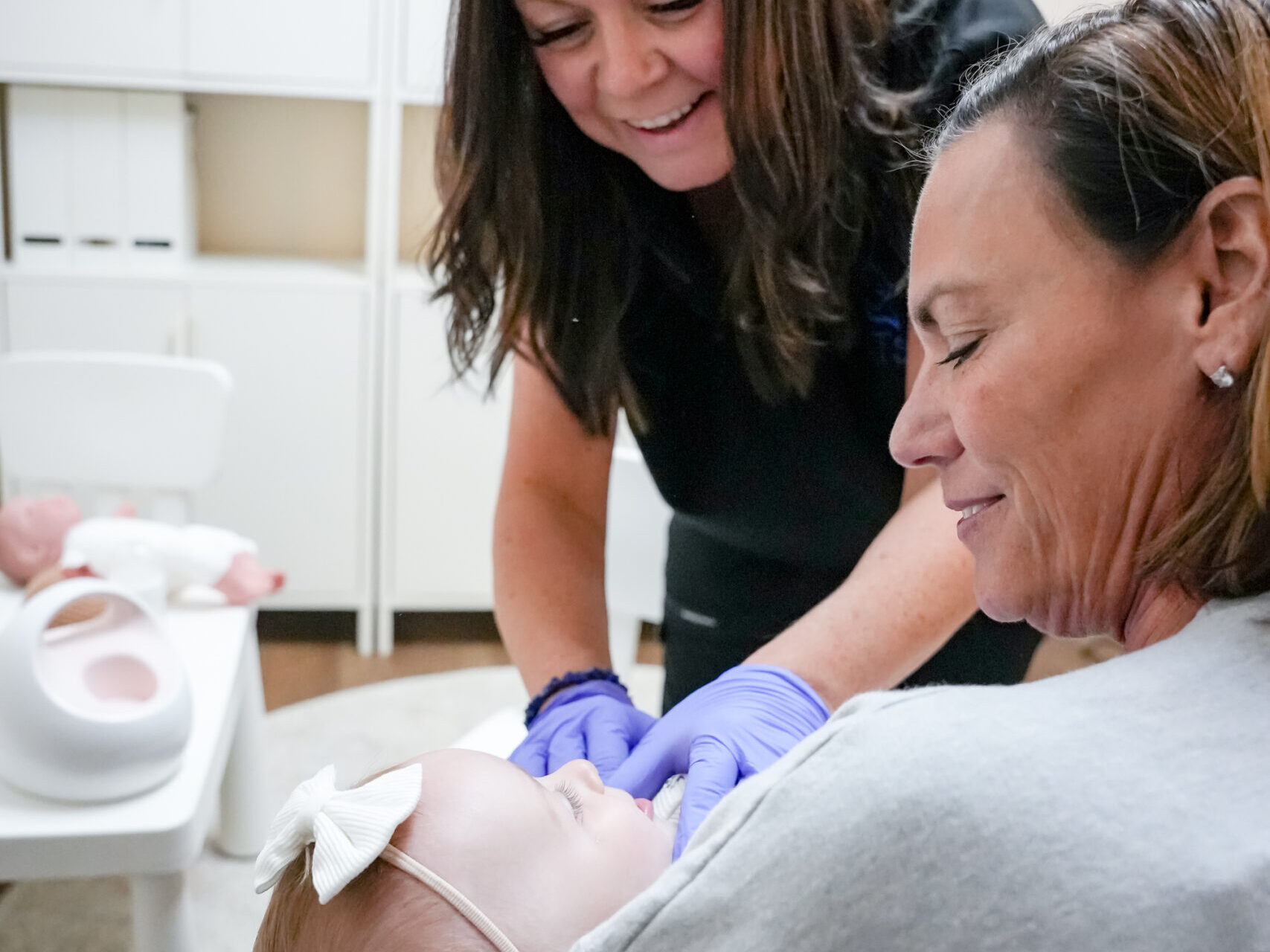


Tongue Tie & Lip Tie (Tethered Oral Tissues) Support in Central Kentucky
Babies, toddlers, children, teens, and adults. Care before and after release.
A tongue tie or lip tie, also called tethered oral tissues (TOTs), happens when the tissue under the tongue or behind the lip is tight enough to limit how the mouth moves. At Kentucky Therapy Solutions, we evaluate and support clients of every age, and we see clients before and after release so the mouth can learn to move and work well. With locations in Lexington and Georgetown, we serve families across Central Kentucky.
Who we see
- Babies: Feeding and latch concerns, with support before and after release.
- Toddlers: Picky eating, chewing, and early speech concerns.
- Children and teens: Speech, eating, sleep, and oral habits.
- Adults: Jaw tension, swallowing, and long-standing mouth and tongue restrictions.
Before and after release
BEFORE
Therapy before a release helps the tongue build strength, coordination, and new movement patterns, so it’s better prepared for the change. We also assess how your mouth moves and functions, explain what to expect, and work with the provider who will perform the release.
AFTER
Because the tongue has already practiced these patterns, healing and retraining tend to go more smoothly. We guide exercises that support healing and help the tongue and lips use their new range of motion. A release alone doesn’t teach the mouth how to move differently, so therapy helps make it count.
What tethered oral tissues can affect:
- Feeding: Trouble latching, painful or slow feeds, clicking or leaking, picky eating, and difficulty with chewing or certain textures.
- Speech: Difficulty making certain sounds or being understood.
- Sleep and breathing: Mouth breathing, snoring, and restless sleep.
- Swallowing and oral habits: Tongue posture, drooling, and swallowing patterns.
- Oral health and teeth: Plaque build-up and changes to the bite.
- Tension and comfort: Jaw, neck, and shoulder tension, especially in older children and adults.